
First Aid Kit and Survival Gear for Canyoning - Part 1 - First Aid Kit
Building an effective first aid kit for canyoning fit for dealing with deadly injuries, major trauma and minor dings.
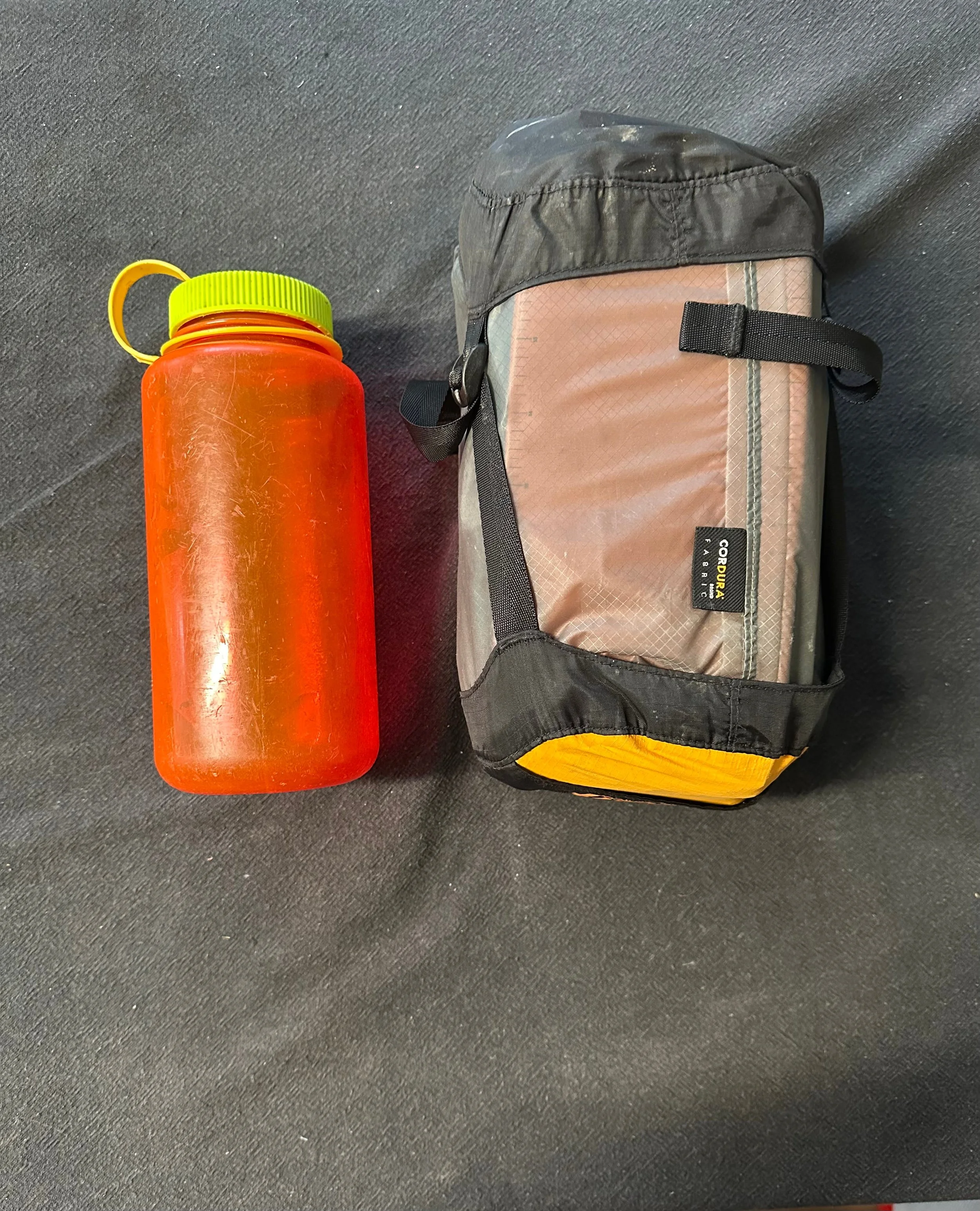
What’s in the box?
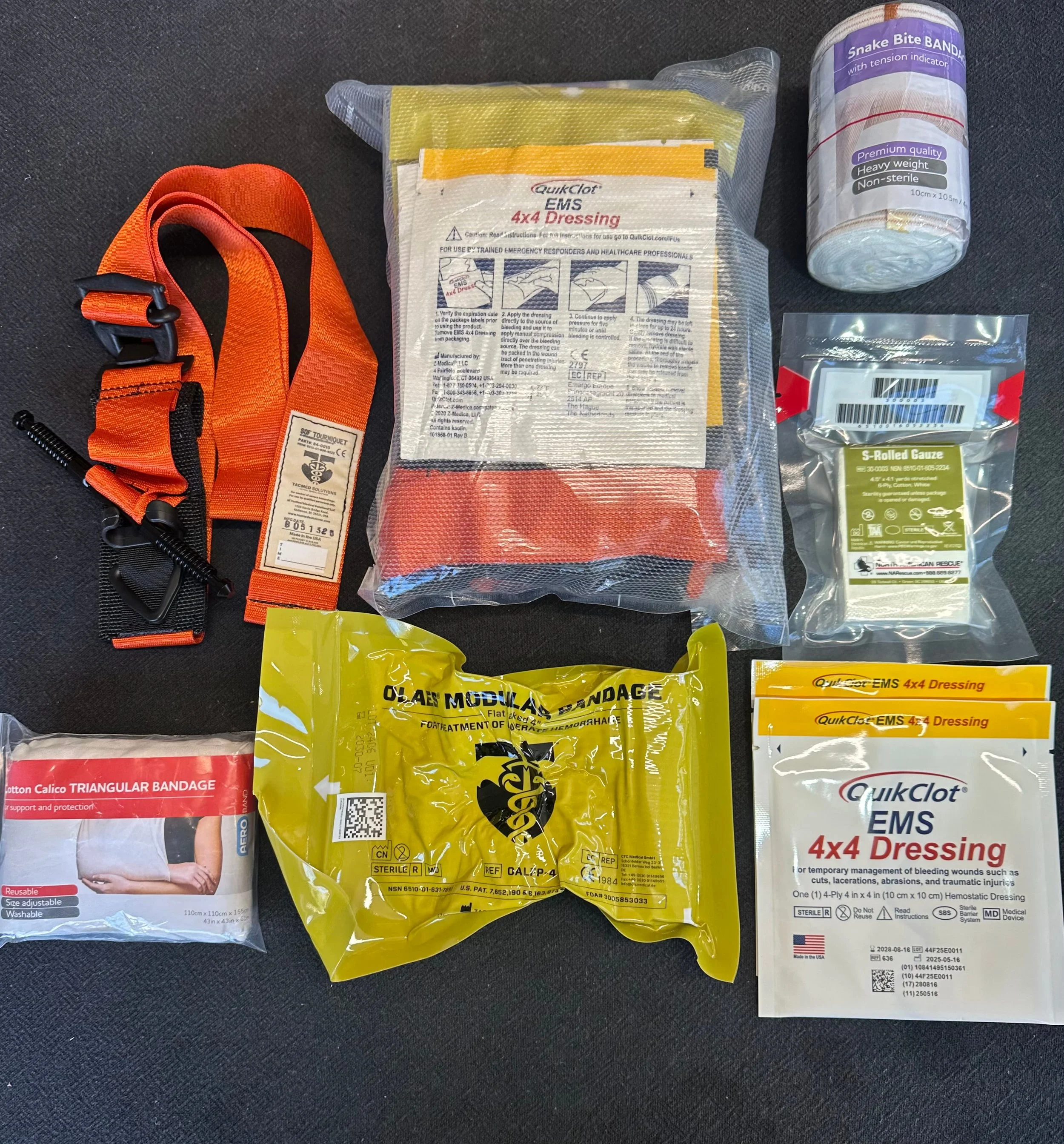
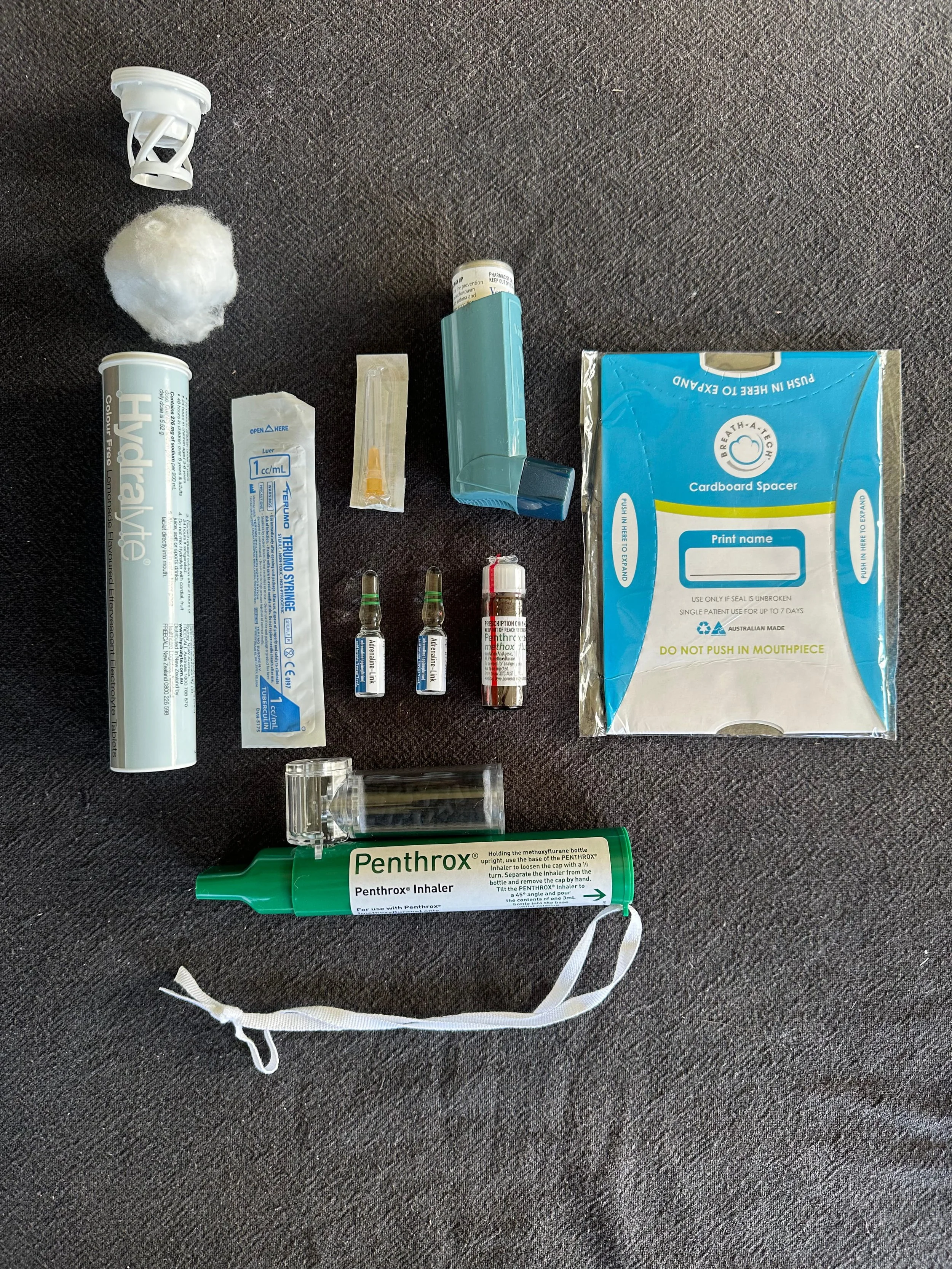
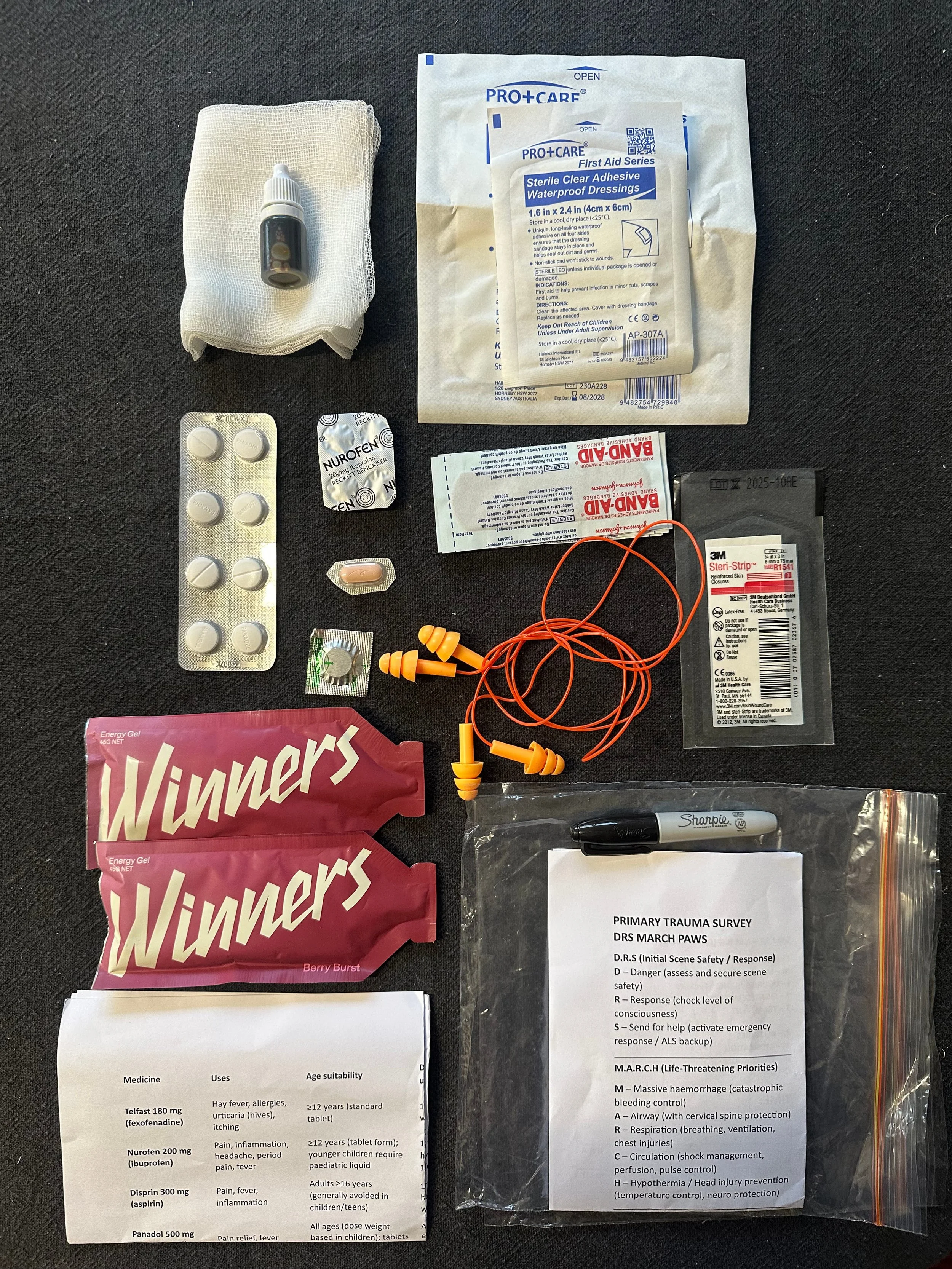
“I'm going on an adventure!”
Even in the best of circumstances rendering first aid can be an intimidating proposition. Within the confines of a city, or large town you can reasonably expect a deep bench of resources either at hand or close by. In a canyon this civilizational buffer feels very far away.
Canyons complicate injuries, minor and major, exponentially. The warmest water summer temps are around 12-degrees, you have deep pools, slippery surfaces, waterfalls, wind tunnels, steep terrain for entry and exits, darkness, noise, environmental, human factors etc etc. They effect and compound each other. Unplanned boo boos can come from anywhere.
The cavalry is coming?
The Blue Mountains is blessed with a myriad of the best rescue services in Australia. NSW Ambulance SOT/SCAT, Blue Mountains Police Rescue, Air Ambulance. Help will* come (probably) but you cannot rely on a prompt arrival. Given all this potential ambiguity your first aid and survival gear has to be fir for the purchase of buying time.
Geographic and geological constriction hampers access from the air and by ground. Warm air temperatures compromise helicopter lift and engine power. Low pressure systems drive colds fronts pushing rain, fog and high winds. Call volume, resource allocation, flight time, refueling, all impact hamper response time. A PLB is not a guarantee of a speedy response.
What do I pack? Mechanism of Injury is king
What you bring for lawn bowls compared to canyoning will vary. The right question is to ask injuries you might reasonably expect? How are they caused? What are the likely mechanisms of injury. Do you have a duty of care? If you don’t what is the plan for first aid? Carrying the kitchen sink and being over encumbered is a risk in of itself
There are various studies you can view about canyon injuries in medical journals. Not surprising most injuries occur in the lower leg, limb, ankles arising from jumping and walking. Other injuries occurring are trauma to pelvis, arms, shoulders. Heights, ropes, jumps, slips, falls, rock fall. All lends itself to trauma.
"I am just going outside and may be some time”
Self-extraction is when injured is very difficult. For injuries where you can move it might be extremely slowly. Often the best option might be not to move at all. Either way you are now “exposed” to the elements. The environment is constantly acting on you. Cold and hyperthermia decrease survival rates from severe traumatic injuries. At best it makes everyone miserable. Mountains have their own hazards too. Rockfall, floods, storm cells, lightening, damaging winds. Given these environment factors you need a toolbox to deal with difficult movement, time delays or staying in place. This will be covered in more detail in the Survival Gear and 10 Essentials Paradigm.
Human factors
Then there are the regular human foibles. Preexisting medical conditions, unknown ones, social facilitation (drinking, drugs, pressure to tag along/keep up etc). These run the gamut of life threating anaphylaxis/asthma, reaggravation of old injuries or negative group dynamics (peer pressure to “send it” has caused many traumatic injuries).
My first aid kit for canyoning was developed with all of these factors in mind. It’s informed by over a decade of guiding, seeing things and with the input of medical professionals. I have tried to achieve a kit that is robust and effective in dealing common happenings, from minor to major, as well as light enough to carry.
First Aid Kit Deep Dive
Some explanation of less common choices and some observations over the years.
Sealing: Dry bag, WP FAK and Vaccum sealing
Triple dry bag everything that cannot get wet.
Choice of large dry bag (30l) or canyon keg, which accommodates waterproof first aid kit with vacuum sealed items inside the FAK
Dry bag pros: easy to fit gear without issue
Dry bag cons: bulkyKeg pros: quicker access to items, better shape for rope and pack management
Keg cons: sometimes a hard object against the back, useless for excess group gear
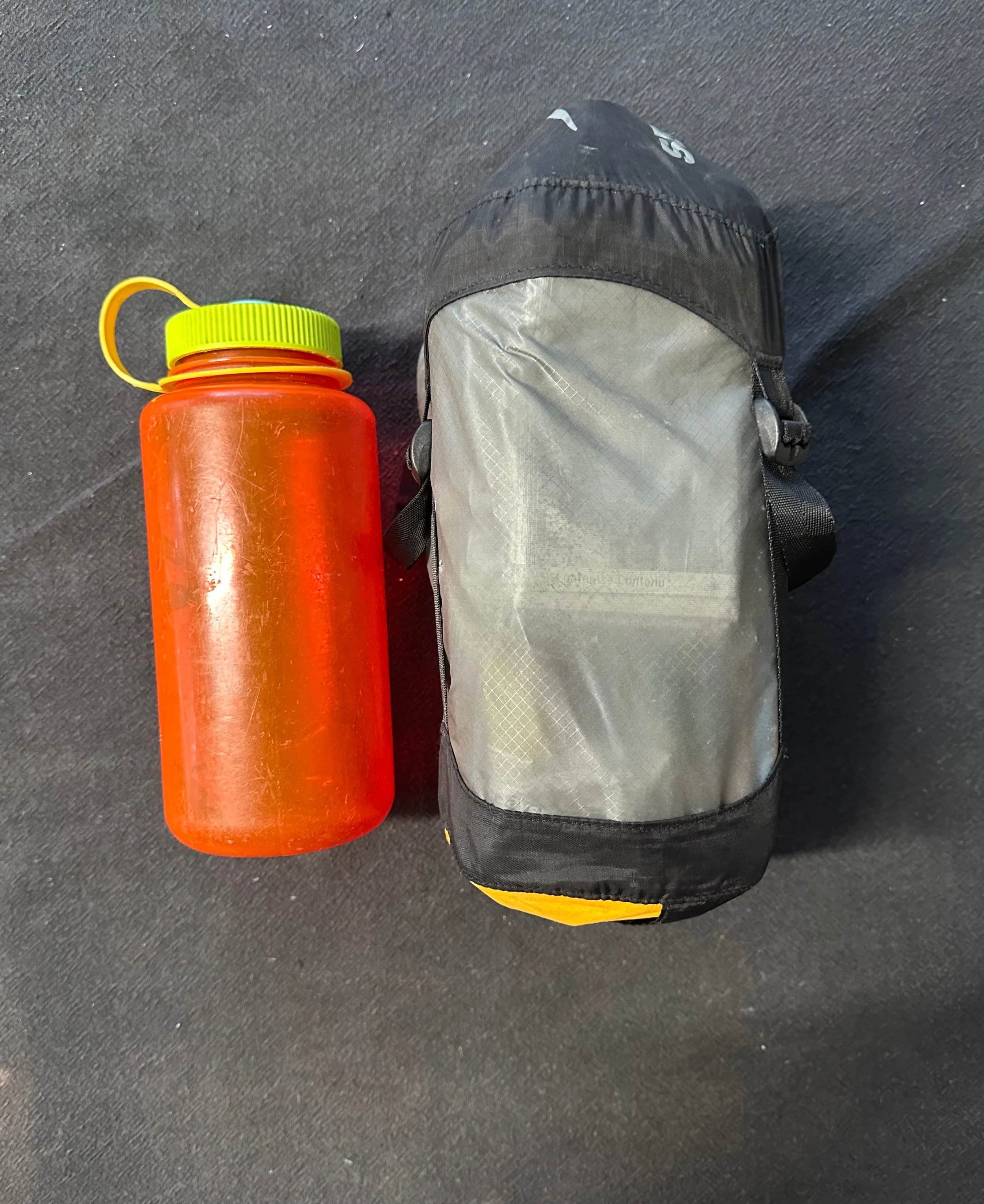
First Aid Dry Bag: Event Evac Dry Sack
This particular dry bag allows you the push air out of the dry bag once it is sealed. This helps compress contents, effectively sandbagging them together, keeping everything tidy. Because you can squeeze the air reducing the size it helps it fit inside a canyon keg.
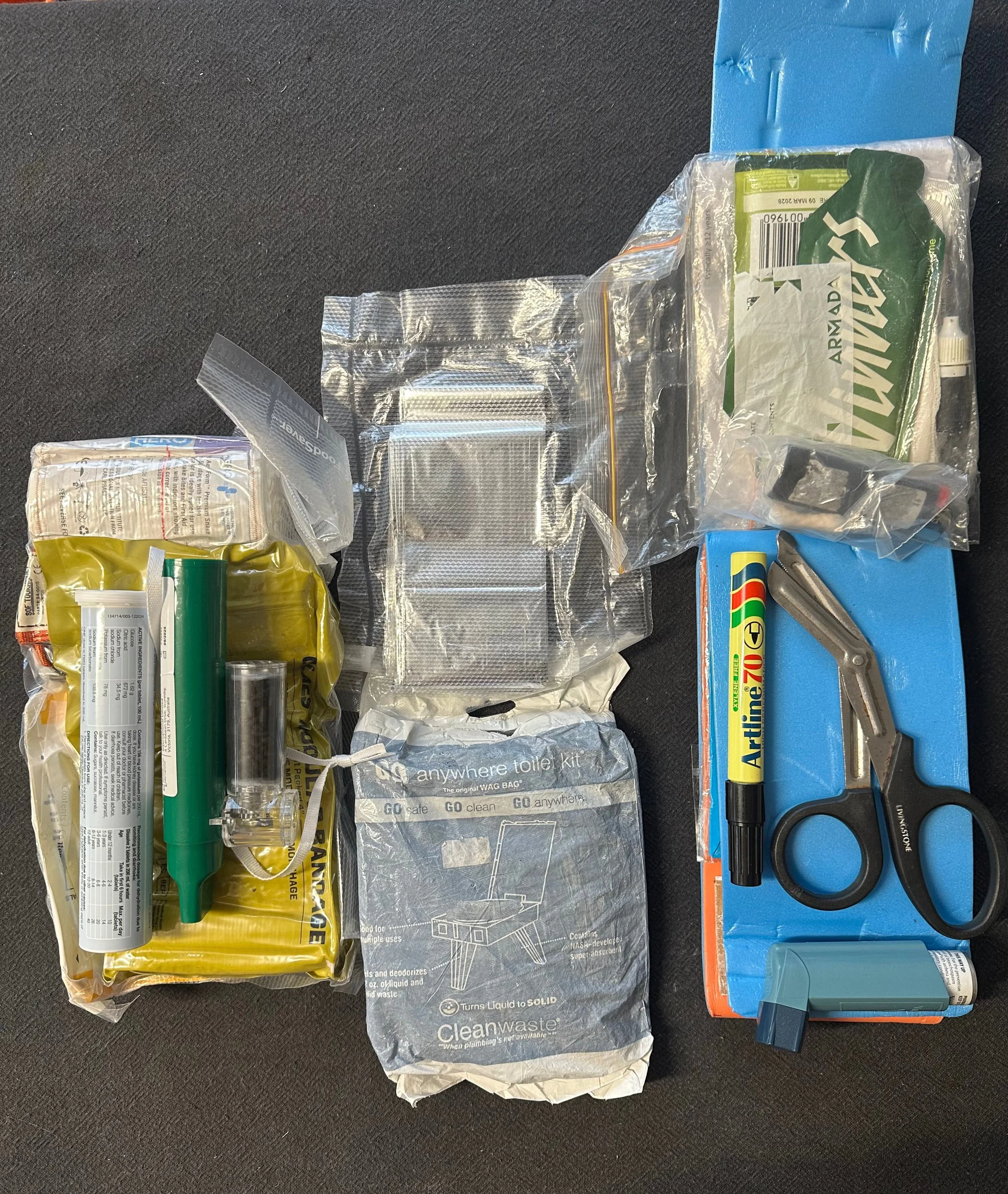
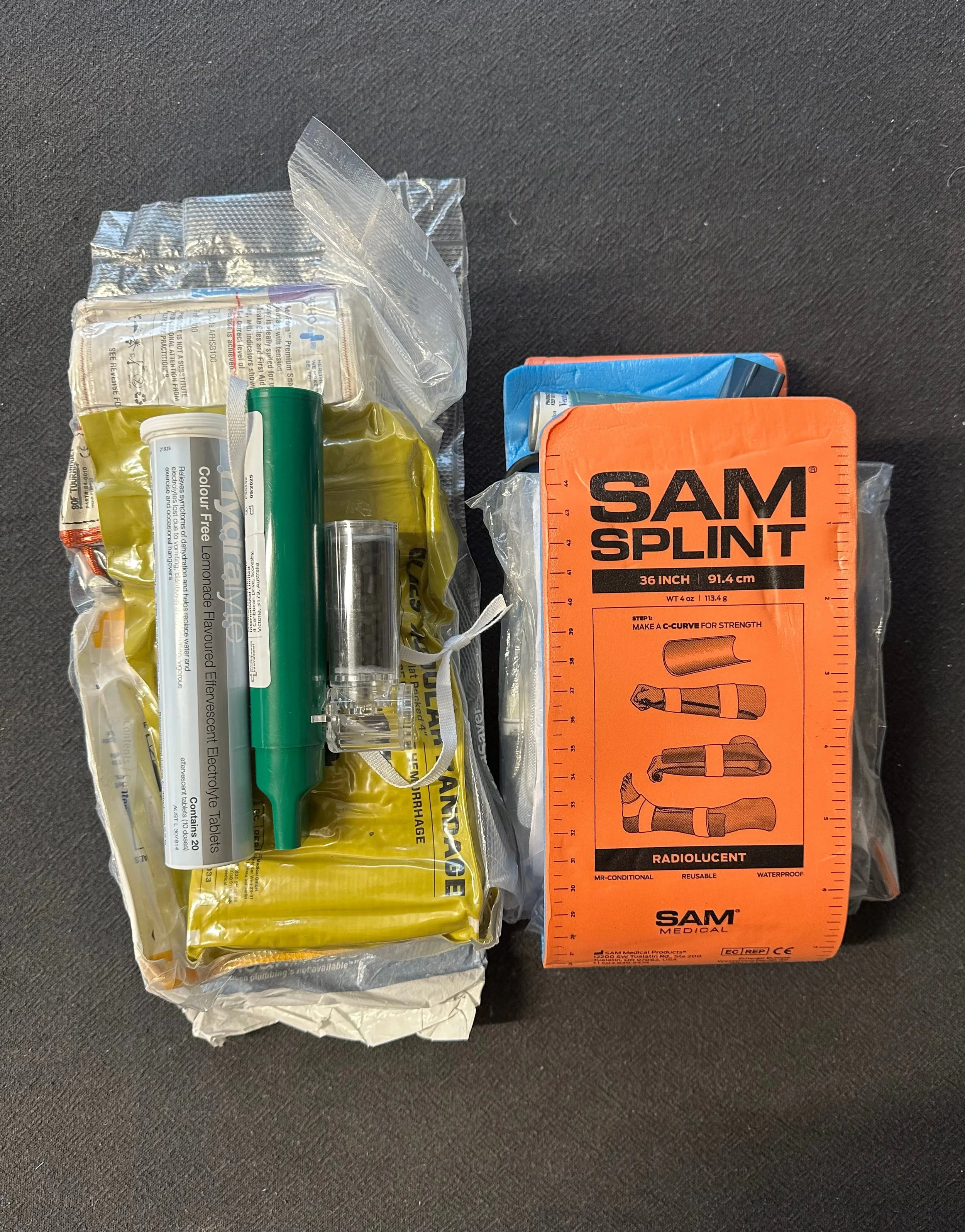
Trauma Kit: 3 Deadlys Kit Comments:
Lots of discussion around improvising, finding sticks for splints, making torniquets etc…you just do not want to stuff around making it up and hoping to jerry rig sub par solutions when you don’t have too.
Trauma dressings are nice, superior to crepe, or roll or whatever bandage you find in an off the shelf first aid kit. The OLAES has multi use items and can be flat packed. Watch this OLAES video for functions.
A Torniquet is essential for stopping deadly bleeds but training and knowledge is required for best practice for using them. I recommend taking a tactical medicine or trauma based first aid course.
Asthma/Allergies/Methoxy comments:
Canyons/the outdoors is a perfect storm for asthma/allergies with cold water, exertion, heat, pollen, group food, insects, biting creatures. Given the frequency and consequence of asthma and lack of improvised solutions I pack an asthma kit. I have seen more than a few asthma attacks and a near fatal asthma once.
Adrenaline ampules are very cheap, seek training on how to do injections (or buy an epipen). Again, for the weight, cost (16 times the amount for ampules) and lifesaving potential it’s a no brainer for me.
Methoxy is a controlled drug and thus requires training for both purchase and supervising a causality when they self-administrating. These legal complications make this a recent, but welcome, addition to my kits. Use cases are: in conjunction with moving someone who is injured, pain relief for dislocation/relocation, and general pain relief for severe pain. Without effective pain relief these circumstances can be excruciating for all involved.
Misc emergency gear comments:
Space blankets are in fact useful (see the table of contents link) be warned they will degrade over time, inspect and replace.
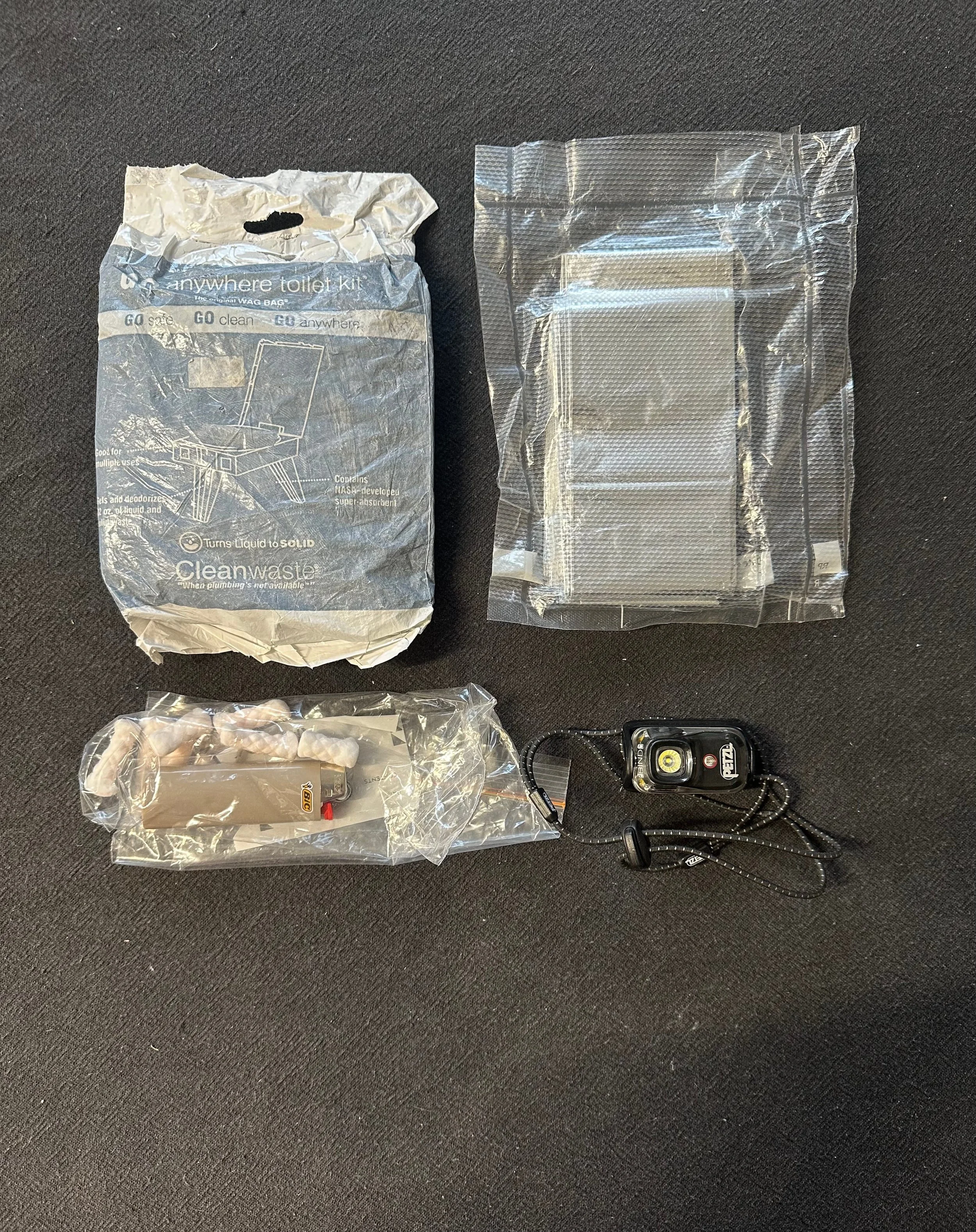
Large lighters in cold conditions are essential when fine motor skills can be impacted by cold. Cheap bic lighters can fail if submerged or dropped in water so be warned!
The wag bag is for unplanned number twos in canyons and becomes a critical item if someone is injured or group benighted. Before wrapping someone up in multiple layers to keep them warm toileting would be best practice, having to unwrap a human tortilla is difficult.
Tune in next time
The First Aid Kit is one part of a whole system of the 10 Essentials. Next is the other survival items that will get you out of trouble.
*(not a guarantee)
